
Weight Management
Understanding Obesity: Diagnosis, Health Risks, and Related Conditions
Obesity is a chronic medical condition — not a personal failure
Obesity is a chronic medical condition in which excess body fat may harm health. It is screened for using body mass index (BMI), but BMI alone is incomplete — waist measurement, blood pressure, blood tests and medical history all matter. It is driven by genetics, metabolism, sleep, medications, environment and other health conditions rather than by willpower.
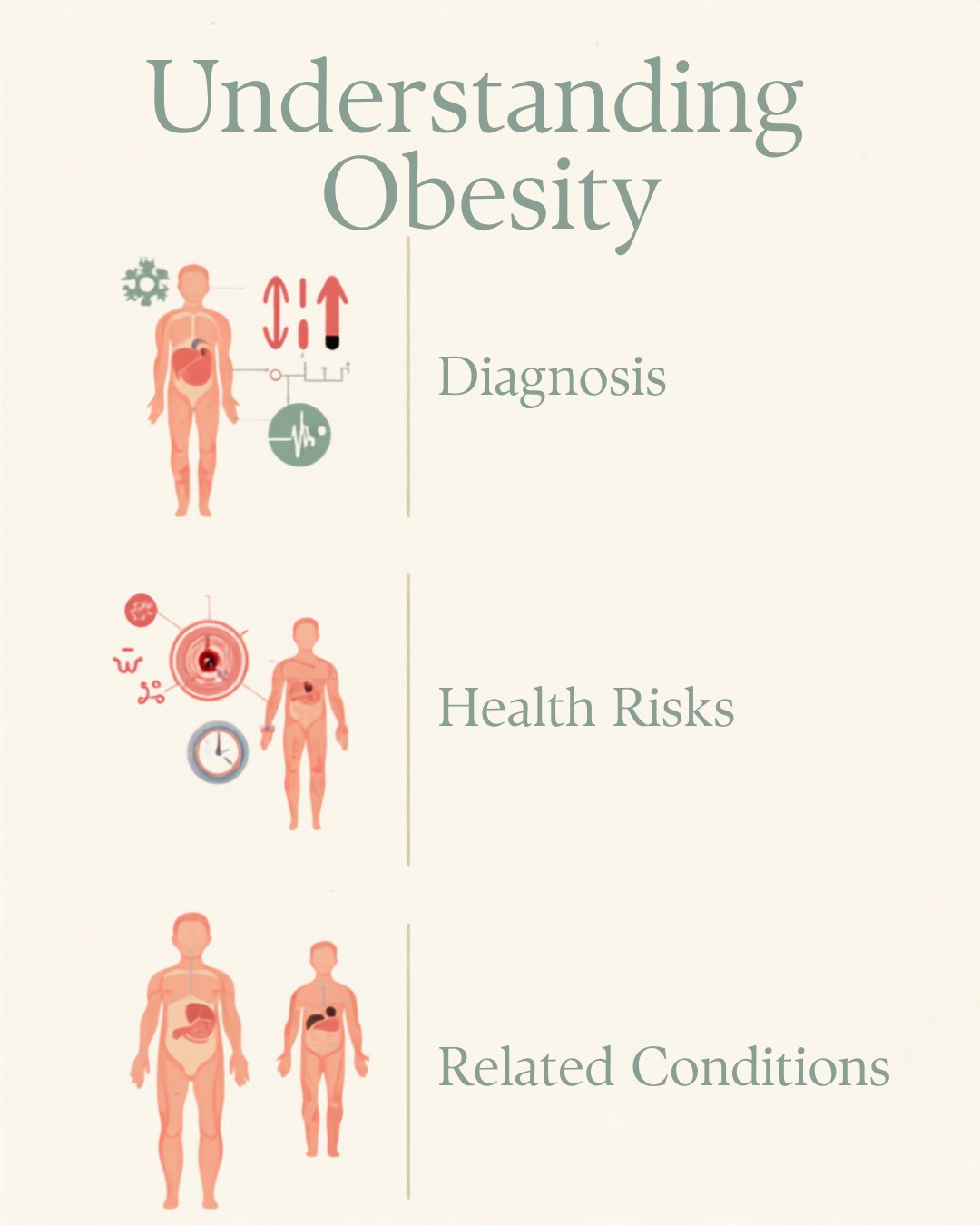
Obesity is more than a number on the scale. It is a chronic health condition that can affect many parts of the body and increase the risk of developing other health problems. Understanding obesity and its possible complications can help you take an active role in protecting your health.
What is obesity?
Obesity occurs when there is an excessive amount of body fat that may negatively affect health. One of the most common tools used by healthcare professionals to screen for obesity is body mass index (BMI), which is calculated using your weight and height.
Although BMI can be useful, it does not tell the whole story. Your healthcare provider may also consider your waist measurement, medical history, blood pressure, blood tests, lifestyle, and other factors when evaluating your health.
Most importantly, obesity should not be viewed as a personal failure. Many factors can contribute to obesity, including genetics, metabolism, sleep, medications, environment, stress, eating patterns, physical activity, and other health conditions.
Why does obesity matter?
Living with obesity can increase the likelihood of developing several other health conditions, sometimes referred to as comorbidities.
These conditions can affect your heart, blood sugar, liver, sleep, joints, mental health, and overall quality of life. The risk can vary from person to person, which is why a healthcare professional may recommend a comprehensive health assessment.
Obesity and type 2 diabetes
Obesity can increase the risk of developing type 2 diabetes. Excess body fat can make it harder for your body to use insulin effectively, which can cause blood sugar levels to rise.
Your healthcare provider may recommend blood tests to check your blood sugar and determine whether you have diabetes or are at increased risk of developing it.
The good news is that improving metabolic health can have important benefits. Depending on your individual situation, changes in nutrition, physical activity, weight, medications, and other treatments may help improve blood sugar control.
Heart disease and high blood pressure
Obesity is also associated with high blood pressure, abnormal cholesterol levels, heart disease, and stroke.
You may not notice symptoms from high blood pressure or high cholesterol, which is why regular checkups are important. Your healthcare provider can assess your cardiovascular risk and recommend appropriate screening and treatment.
Taking care of your blood pressure, cholesterol, blood sugar, and weight can be an important part of protecting your heart.
Fatty liver disease
Obesity can increase the risk of developing metabolic dysfunction-associated steatotic liver disease (MASLD), sometimes referred to as fatty liver disease.
This condition occurs when excess fat builds up in the liver. Many people have no symptoms, so it may be discovered during routine blood tests or imaging studies.
In some people, MASLD can progress to liver inflammation and scarring. If you have obesity, diabetes, or other metabolic risk factors, your healthcare provider may evaluate your liver health.
Sleep apnea and poor sleep
Obesity can increase the risk of obstructive sleep apnea, a condition in which breathing repeatedly stops or becomes blocked during sleep.
Possible warning signs of sleep apnea
- Loud or frequent snoring
- Waking up gasping or choking
- Excessive daytime tiredness
- Morning headaches
- Difficulty concentrating
- Feeling unrefreshed after sleeping
If you experience these symptoms, talk with your healthcare provider. Sleep apnea can be treated, and improving sleep can make an important difference in your overall health and quality of life.
Joint pain and mobility problems
Carrying excess weight can place additional stress on your knees, hips, back, and other joints. Over time, this may contribute to joint pain and osteoarthritis.
Pain can also make it more difficult to exercise or remain physically active, creating a cycle in which reduced activity and weight gain can reinforce one another.
Your healthcare team can help you find safe and realistic ways to improve mobility and physical activity according to your individual needs.
Emotional health matters too
Obesity can affect emotional well-being as well as physical health. Some people living with obesity experience depression, anxiety, low self-esteem, or social isolation.
It is also important to recognize that weight stigma and discrimination are not healthcare solutions. Feeling judged can make people less likely to seek medical care or talk openly about their health.
If your weight is affecting your emotional well-being, talk with your healthcare provider. Mental health is an important part of overall health and deserves the same attention as physical health.
What should you discuss with your healthcare provider?
If you are living with obesity or are concerned about your weight, consider asking your healthcare provider about your individual health risks. Depending on your situation, your healthcare professional may evaluate:
- Blood pressure
- Blood sugar and diabetes risk
- Cholesterol
- Liver health
- Sleep apnea
- Joint and mobility problems
- Mental and emotional well-being
- Medications that may affect weight
- Other medical conditions and risk factors
This evaluation can help identify problems that may not cause noticeable symptoms yet.
Treatment is about more than losing weight
There is no single approach to treating obesity that works for everyone.
Depending on your health, goals, and medical history, treatment may include changes in eating habits, physical activity, behavioral support, prescription medications, or metabolic and bariatric procedures.
The goal is not simply to reach a particular number on the scale. Treatment can also focus on improving blood pressure, blood sugar, cholesterol, sleep, mobility, energy, and overall quality of life.
If you have tried to lose weight before and regained it, you are not alone. Obesity is a chronic condition, and managing it may require ongoing support and adjustments over time.
Common questions
Why is obesity considered a chronic medical condition rather than a lack of willpower?
Major medical organisations recognise obesity as a complex, chronic disease because body weight is regulated by intricate biological systems — metabolic rate, brain signalling, genetics and hormone pathways such as leptin and ghrelin — and not by conscious choice alone. When a person loses weight, the body responds by slowing metabolism and increasing hunger signals to defend its baseline set-point. Treating obesity as a chronic condition frames it around long-term medical management, lifestyle change and evidence-based therapy rather than personal failure.
What does BMI tell us about health, and what are its major limitations?
Body mass index is a simple screening tool calculated from height and weight to categorise body size across populations. It gives a quick baseline, but it cannot distinguish muscle from fat, or account for bone density or fluid retention. An athlete carrying significant muscle may be classified as having obesity, while an older person with low muscle and high body fat — sarcopenic obesity — may score in the normal range. BMI also says nothing about where fat sits on the body, which is central to assessing risk.
What health conditions are linked to obesity, and how should a provider evaluate health beyond BMI?
Obesity is associated with more than 200 medical conditions, among them type 2 diabetes, hypertension, cardiovascular disease, obstructive sleep apnoea, metabolic dysfunction-associated steatotic liver disease (MASLD, formerly NAFLD), joint pain and certain cancers. Because BMI alone gives an incomplete picture, a thorough evaluation looks at fat distribution (waist circumference and waist-to-hip ratio, which indicate visceral fat around the abdominal organs and carry higher metabolic risk); metabolic markers (blood pressure, fasting glucose, HbA1c, lipid profile and liver enzymes); function (mobility, joint health, sleep quality and stamina); and root causes (medication side effects, underlying endocrine or hormonal imbalance, stress, and dietary and sleep habits).
Taking the next step

If you are concerned about obesity or any of the conditions associated with it, you do not have to manage it alone.
Start by having an honest conversation with your healthcare provider. Ask what your current health risks are, whether you should be screened for obesity-related conditions, and which treatment options may be appropriate for you.
Your health is about much more than your weight. Understanding your individual risks and getting the right support can be an important first step toward better health and a better quality of life.
Medical disclaimer. This article is general education, not medical advice, and does not create a physician–patient relationship. It cannot account for your own history, medications or risk factors. Talk to your physician before making changes to your diet, medication or exercise routine. To speak with our team, call (407) 480-4830.
← All articles